
Menu
 Home
HomeMask & Tide in Ambalangoda is situated down south on the cinnamon coastline sculpted by ancient artisan traditions of mask making and centuries of trade in spices. A place of raw mystical beauty, where demonic dances heal, and the line between the human mind and the spirit world is as fluid as the cosmic tides that hide the secrets of the Indian Ocean.
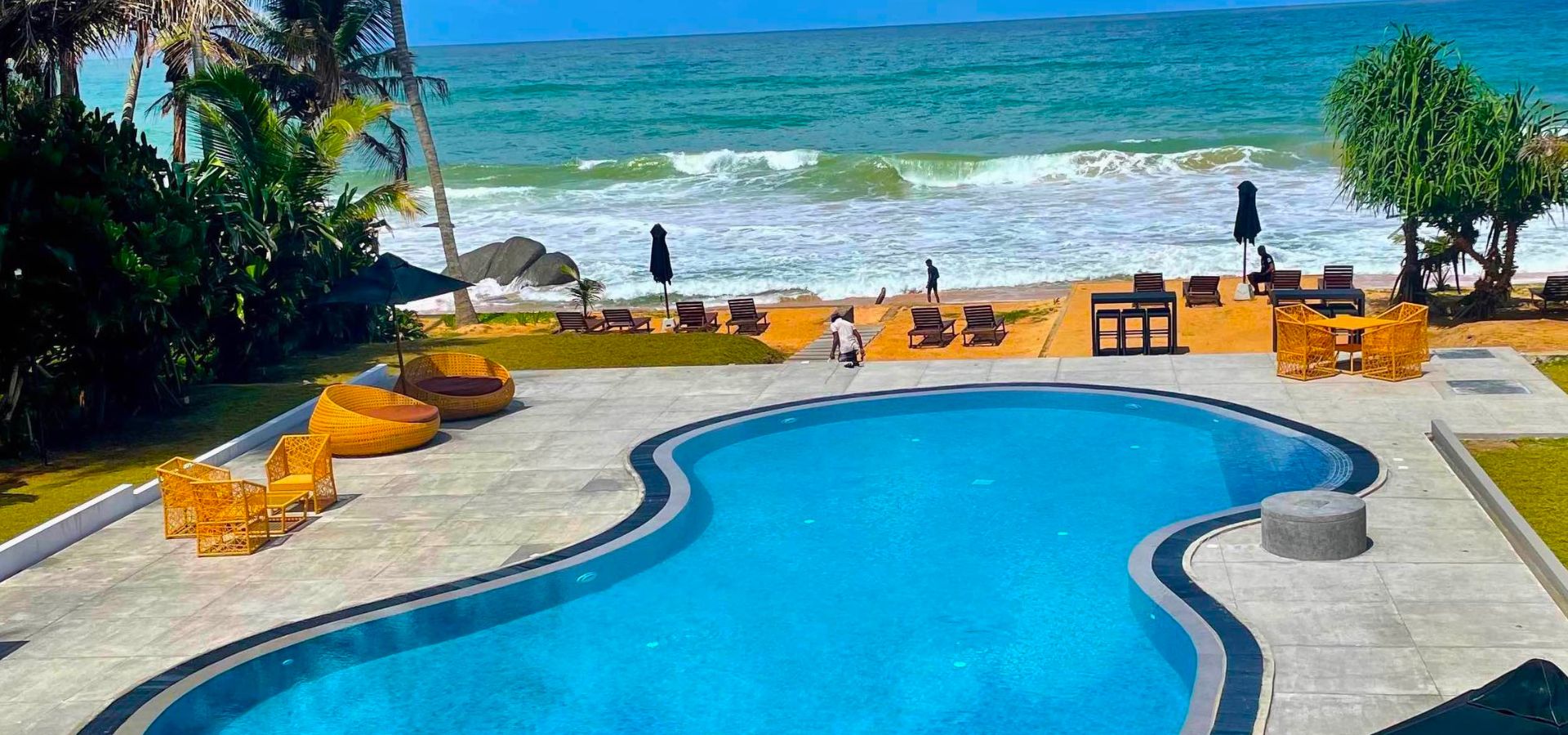
For Miyuru de Silva, Ambalangoda isn’t just a workplace—it’s his home. His passion for this community and its rugged beauty is what led him to join Jetwing’s Mask & Tide team. Step into the restaurant, and you’ll immediately see what keeps him here. The views are pure magic: wild waves crashing over ancient black rocks before cascading like miniature waterfalls back into the sea, all framed by swaying coconut palms and golden sand. A location where the seasons dictate the different wildlife rituals, such as when the sea turtles emerge from the Indian ocean to nest on the sandy shore line. To Green turtles on a clear day, riding the waves like seasoned Hikkaduwa surfers. In the canopy of forest trees either side of the property mischievous monkeys swing by, while crested eagles circle the area towards the hours of sun set and from time to time cheeky porcupines proudly amble past the azure pool, where monitor lizards will also stop for a quick drink.
Located at 509 Galle Road. Mask & Tide also has an excellent Balinese Spa, where you can pamper yourself in style or go for a walk barefoot on the golden sands. I love losing myself in mindful contemplation on a solitary driftwood swing hanging from a coconut tree. Every bedroom—complete with balconies spread across five floors—acts as a private viewing gallery to the Indian ocean. The large, well-positioned azure pool, is designed in a figure-of-eight that merges like a David Hockney painting into the vast natural landscape of the sea and sky.
The conductor of the Mask & Tide success story is Tara, whose name represents a guiding light to enlightenment. Following an incredible career built on being one of the island’s top events organisers including spectacular weddings, she conjures up bespoke experiences as if by magic—ranging from cooking classes that include a visit to the local fish market, to mask-painting, kite flying, whilst also encouraging guests to explore the areas vibrant local art scene. She has many creative ventures up her sleeve, including the island’s first painting class swapping traditional canvases for sparkling saris.
Ideally positioned to do day trips to top tourist attractions the Mask & Tide is less than an hour away from the UNESCO World Heritage site of Galle Fort and in the opposite direction the legendary Bawa brothers’ homes of Lunuganga and Brief Garden. The hotel is also next door of the spectacular Randombe Sangharaja Vihara ancient temple dating back to 1251 AD.
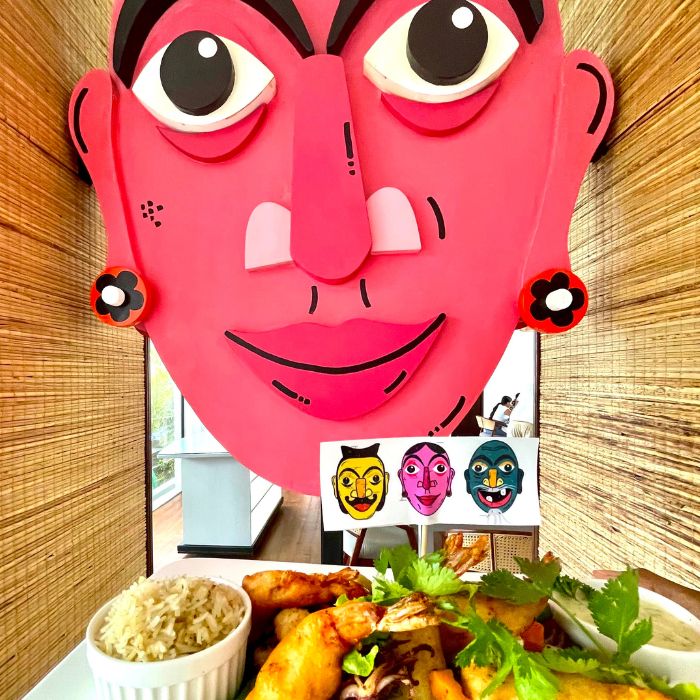
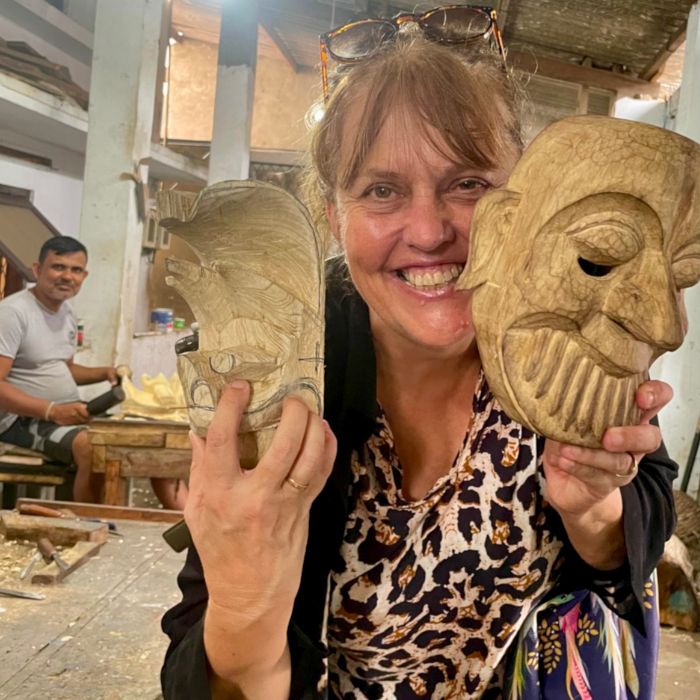
Designated an important coastal wetlands area for its bountiful supply of sacred kaduru soft wood, that is easily carved by master craftsman into gods, theatrical puppets and healing devil dancing masks. After the bark is removed, the wood is pliable enough for the artist to chisel extraordinarily powerful pieces from it. The carved masks are then left to dry and harden in the tropical sun light ready to apply vivid reds, blacks, blues and yellows paints to.
To observe masks being made you can walk a kilometre from the hotel to a bend in the road, where two museums were created in 1987: one dedicated to mask-making history called Ariyapala Traditional Masks, and another combining both art forms, the Ariyapala Masks & Puppets Museum, where they have an amusing mechanical puppet show. Miyuru explains as we walk around the area that masks are not mere tourist souvenirs; they genuinely protect you and your home from the “evil eye” and, even more importantly, the “evil mouth” that can lead to a person’s downfall. Local tradition dictates that all illness is intrinsically linked to one’s mental state. This can be cognitively shifted from negative to positive using a series of distinct drums, dance and even satire to open the damaged mind using humour to trick the malevolent spirits into withdrawing. The main Sunni Devil Dancing mask is a symbolic representation of the 18 different physical and mental illnesses in the world such as blindness, fevers, stomach pains, extreme migraines and even toothache. Traditional practitioners believe that all these ailments are simply tormented spirits that have entered a vulnerable body and must be exorcised. Miyuru de Silva notes that Jetwing at Mask & Tide recognises the importance of sharing this lively living history, that treats the source of any health problem even madness. He explains bringing back harmony into the body requires using the Ginni Raksha (fire demon) mask with its terrifying, bulging blood-red eyes that pop out of their sockets in order to shock the patient out of their affliction. These highly detailed demonic masks also feature flared up nostrils, horrible jagged crooked teeth, large tusks or Dracula like fangs, and a protruding red tongue, topped with scary Medusa-like cobra snakes hair. The underlying philosophy is that these monstrous looking carved faces absorb the evil eye and stop it entering your home.
Even today, Miyuru explains if there is a serious problem, an exorcist is called in to resolve the situation using Bali and Thovil—traditional rituals. All of which are centred around dances that are entirely distinct and different from the acrobatic Kandyan ones. From his usually smiling self he becomes deeply serious as he explains the demonic crew of healers will arrive at the sick person’s home in the evening with drums and wearing a range of both scary and amusing costumes, staying on frenetically dancing until the early hours of the morning. They use fire and three different types of drums, playing each one to dismantle the layers of negative and destructive thoughts. The drums include Gata Beraya, which produces a majestic sound often heard at Sri Lankan weddings; the Yak Beraya, a drum made from cow stomach lining that induces a hypnotic trance state; and the Dawla Beraya, a cylindrical drum that creates a heavy, echoing sound perfect for prayers. Each drum alters the patient’s mental vibrations and repairs fractured thinking by bypassing the conscious brain, interacting directly with the nervous system. This musical ensemble heal the psychological distress in the body by helping the persons mind confront its inner fears in a safe space.
Miyuru explains the rituals work like shockwaves triggered from watching a performer swallow flames and spin fire torches in all directions without even getting burnt. These sudden bursts of flames makes onlookers fearful, serving as a powerful reminder of the importance of always living in the NOW —or find yourself singed by one of the fire throwers.
The masks he explains are mostly bought today, by visitors as souvenirs, but with mental health becoming a global crisis people are again becoming interested in mask shock therapy. For Miyuru it is a vital part of Ambalangoda’s rich culture as after school, he would go to a friend’s house instead of the beach for a swim to carve traditional masks. He recalls with fondness creating the Gini Jala Sanni (the disease-healing flame demon mask). Even now, in his spare time, he meets up with Manoj, who professionally crafts masks for traditional family homes—both for decoration and the protection they bring to a space.
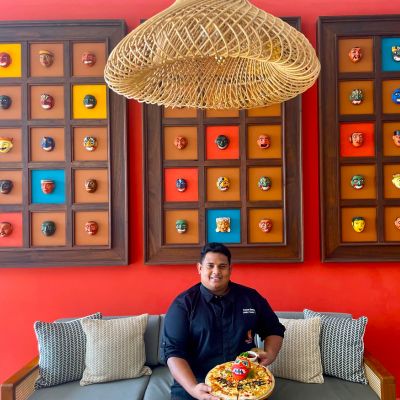
Mask & Tide features forty-five different masks arranged as a series of three colourful art installations at the resort entrance, creating an exceptionally welcoming space. Sitting among the miniature versions of masks, it is easy to understand why you would feel completely protected, especially since the collection even includes a mask depicting a colonial policeman. Perhaps this is the reason so many travellers note in their reviews that the Mask & Tide is such a positive, friendly, and relaxing place to stay.
Miyuru wonders if Ambalangoda got its name as a “resting spot for travellers” is actually deeper than just taking a break on the way to Galle or heading back to the capital, Colombo. Noticing how guests find their own inner tide here, and leave looking stress free he feels is all to do with not only the stunning beach, but the access to explore many fascinating temples, a delightful spice garden and the Meetiyagoda moonstone gem mine only seven kilometres away. Some guests try their hand at night fishing with rods or on special request have a go at traditional low country dancing. Ambalangoda may at fist glance feel like a sleepy town, but it truly has something for everyone whether it’s buying affordable fashion, watching batik makers, exploring antique emporiums full of hidden treasures, or enjoying watching masterful craftsmen carving their latest masterpieces.
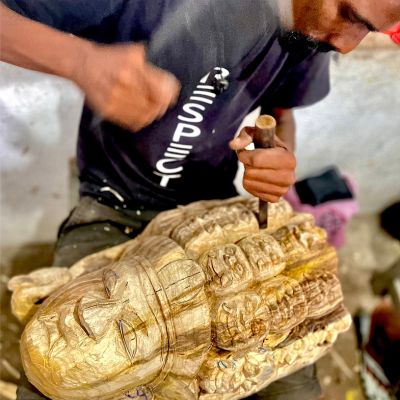
Tara, the property manager of Mask & Tide, feels that Ambalangoda’s chief charms is that it’s still undiscovered. Also an easy place to get to as you no longer require a driver; as she has observed a growing travel trend in taking the train, as it is cheap, easy, fast and fun and takes around one and a half hours from Colombo. Allowing one to relax and enjoy all the lovely coastal views and a three minute three wheeler ride from the train station to the hotel. The thirty deluxe and super deluxe chic bedrooms in the property are also loved for their access to the expansive pool, lovely lawn, and secluded sandy beach. “But the most important thing of all,” she says proudly, “is that we are part of Jetwing.” A company deeply passionate about delivering the best in hospitality. Always reaching for finer culinary heights with their exciting new restaurant menu being released in October. Plus lots of fun new experiences that celebrate the island’s rich cultural tapestry—woven together by a team whose effortless warmth and genuine smiles turn an ordinary beach stay into an extraordinary awakening.