
Menu
 Home
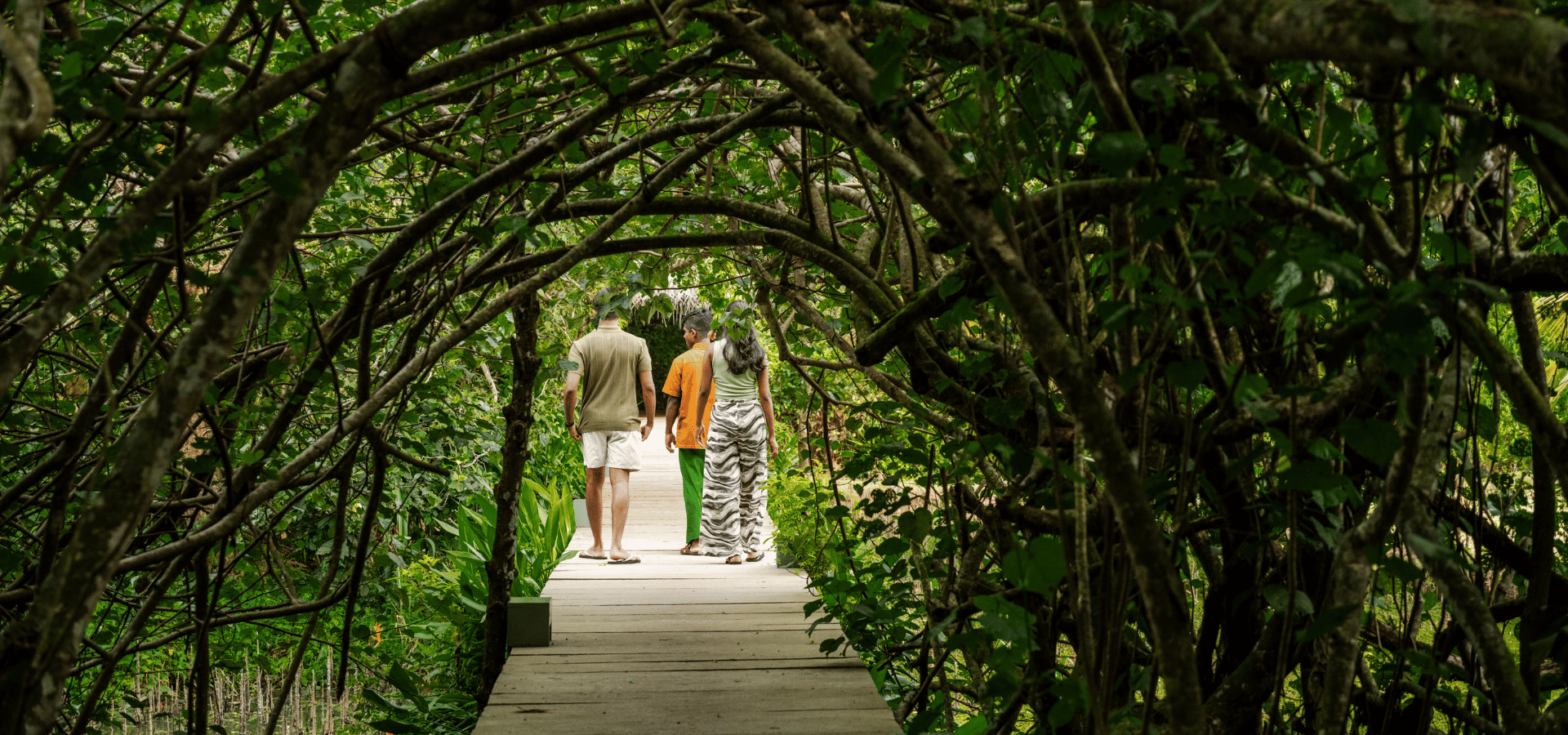
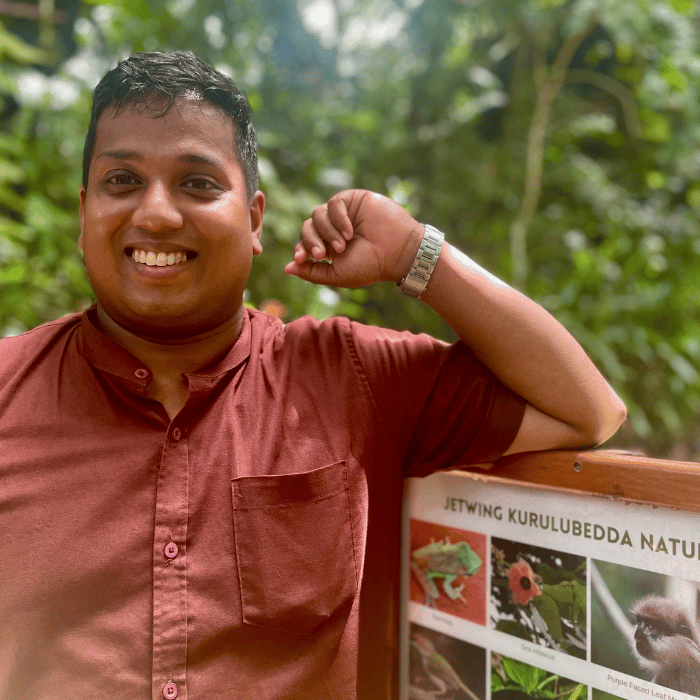
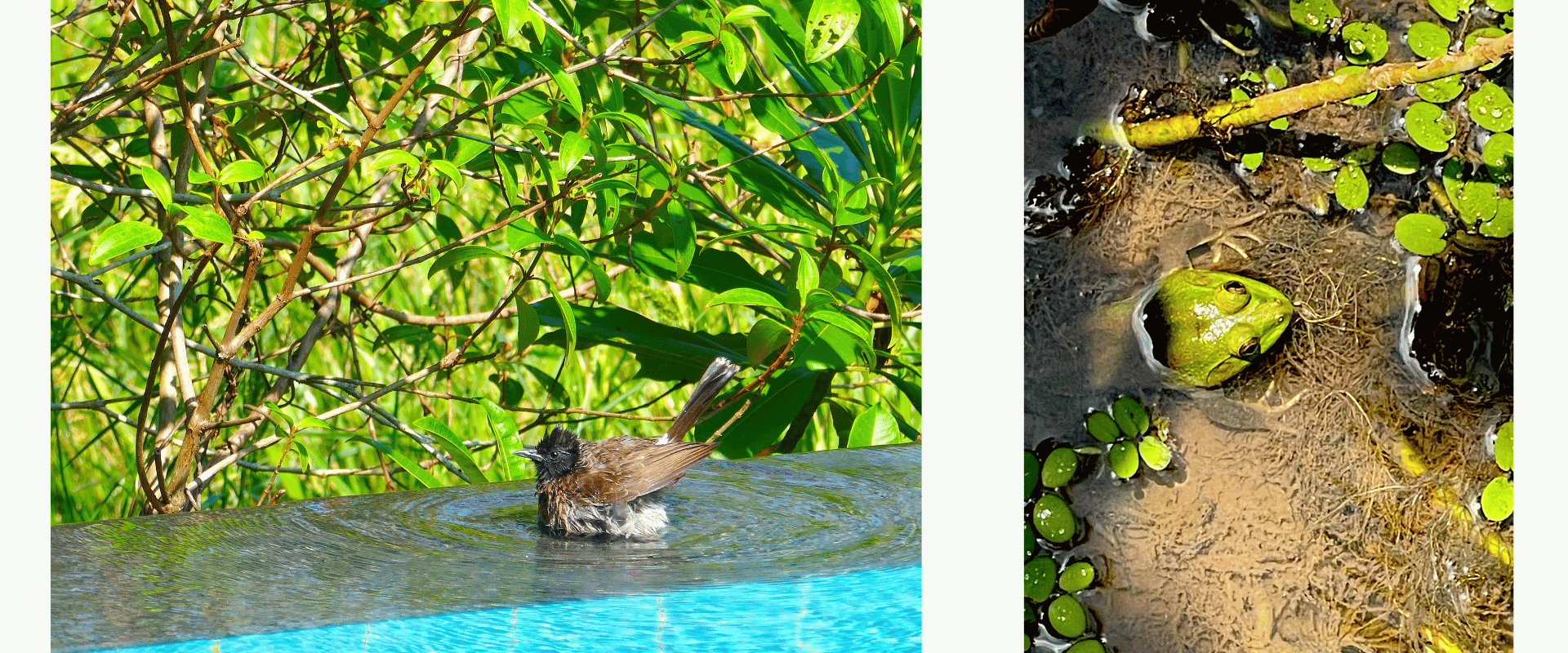
HomeAs the first light is catching the Sri Lankan heirloom indigenous rice, the paddy field dragon fly dances here and there flitting between the coiling earthen pathways as the monks can be heard chanting from the village temple. These simple mud tracks act as natural dividers for Janaka the gardener to walk across the field without damaging the crops followed by a rainbow of birds, who use them as platforms to survey their jungle kingdom. Drinking a cup of sweet tea you head off at 6.30am with Sanjeewa Thilakarathna into the Mangrove Plantation through an intertwined archway of Sea hibiscus. He believes that nature is totally mind relaxing and the more you discover the happier you become. Hailing from the tea country he personally loves the muddy pencil and prop roots that look just like a miniature New York city. Demonstrating for him the power of nature to rise up even in the muddiest of conditions. It is here he shows us green frogs popping their heads out of the water to sun bath and snack on passing insects. Sometimes coming together as a group to croak or mate when it rains. He points out on the walk the four varieties of frogs found in Mahamodara Mahamudali Mawatha area including adorable Hollow-snouted shrub and Stuart’s green pond shrub frogs. The most photogenic are the Sharp-snout saddled tree frogs and my favourite are the ugly as the witches bulging eyed Noellert’s Toad, which gives one the feeling of stepping into a Harry Potter movie.
All this wildlife action takes place in the pond near the summer hut, where you can read books on dragon flies of which more than thirty varieties can be found on the property. Along with binoculars you can spot thirty five different types of birds, and if you are lucky see a porcupine cross your pathway. Everyday is an adventure with Sanjeewa nature’s natural guide as his philosophy is that the forest is not only a really fun place to stay, but also cures those who have arrived enormously stressed, sad from a recent loss or totally burnt out from work. With the biggest smile he says it weaves its magic on everyone particularly the honey moon couples. Most days he can show you a family of land monitors under the deck and sometimes mongoose, who make love in the palm tree garden by the honey moon suite. They use it as their crossroads to the river where a tree house sits with dining furniture made from tree roots and drinks bottles are turned into vases using coir coconut rope wrapped around them.
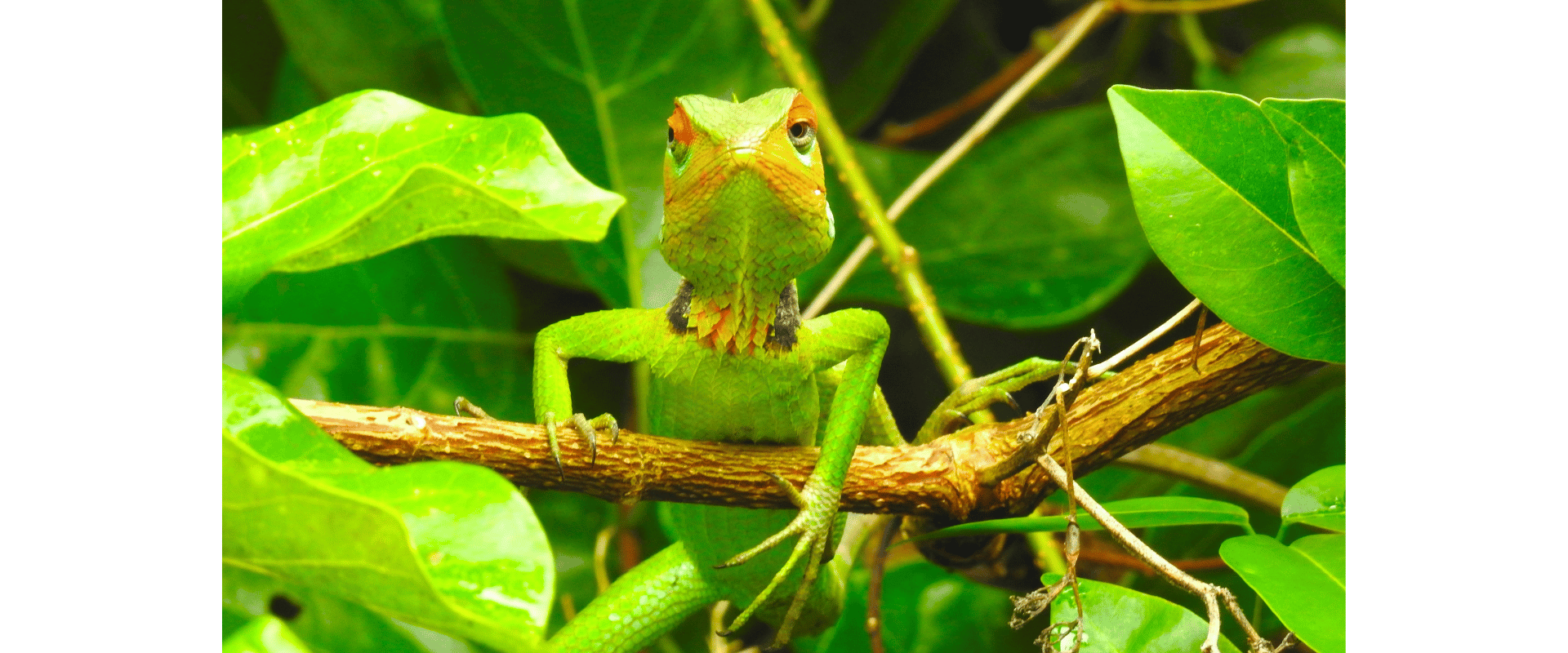
It is impossible to say how long you should stay here as everyday of the year is different at Kurulubedda some days you see tiny turtles playing in the water, others an otter in the river finding things to build a den with, or you might experience a magnificent python or cobra curled around a tree branch. The dragon-like water and land monitor lizards with their slithering fork tongues tasting the air are the most frequently viewed wildlife acting as if they are somehow guarding the property from outsiders. For most guests it’s the joy of watching the hilarious gang of twenty playful Purple Leaf monkeys, who come daily to eat Almond, Donka and Kirala tree fruits and leaves. Impressing us with their four to five feet athletic tree jumps, as they loyally follow the big Alpha male from one premium property to another. Today Sanjeewa explains they are at Tamarind Hill and not to be disappointed as there are plenty of other exciting creatures including water birds, and a group of fishing cats that come in the evening to eat the Fiddler mud crabs. At the end of the walkway where the river begins a gang of fifty Black Crowne Night Herons live and if you go on a boat trip with Kumara he will show you many more birding jungle experiences and make you a water lily necklace.
Each of the hundred plus trees planted a few decades ago has a purpose like the sweet smelling Kaduru also known as the Suicide Tree, which has for centuries been deliberately grown beside the paddy field to attract the insects away from ruining the crops. Tropical flowers Maha Bovitiya, Birds of Paradise Flower, Kerala Flower, Atteriya Flower, and Rathmal are dotted around the property like a firework display against the leafy shades of green.
In the organic rice field the grey pigeons coo and make love fluttering on top of each other, peacocks strut giving spectacular displays against the rice, which is harvested twice a year. During this time hundreds of little Scaly Breasted Munia birds flock to the area to feast on the delicious grown paddy seeds hanging off the rice pinnacles. Treating themselves afterwards to a giant swimming pool bird bath, which makes a dip in the villa pool with a gang of twittering birds all the more endearing.
The combination of colour, sound and jungle smell of all the plants particularly after the monsoon rain is like a calming green tonic that resets your cortisol levels. Sanjeewa explains “the human is also an animal and wants to be in the jungle, and live as we all lived in ancient times with the wild. Nature ultimately rules us and we have to obey or face the consequences.” Returning to my luxurious watch hut designed by architect Geoffrey Bawa’s protege Channa Daswatte you can sit in your nature viewing gallery and enjoy the many live moments of jungle interaction including seeing a fishing cat jump out of the pond at the corner of the paddy field. Cat calling as it is followed by a monstrous five foot water monitor lizard, that could easily be mistaken for a crocodile. The larger than average domestic cat has its tail permanently in the air like a rudder to navigate by and unlike a domestic one has partially webbed feet with razor sharp claws thick with pond mud. Moving swiftly across the field to avoid becoming dinner for the monitor lizard, it dives back into the pond to carry on mud crabbing. The chase scene was the equivalent of watching National Geographic live as the cat vanished. The monitor clawed its way up the nearest tree to see where it had gone as he was not going to give up easily. Back in the water I could hear both of them having quite the contra tent with the monitor’s tail causing splashes as it moved from side to side and then silence. Luckily this time the Fishing Cat made a full escape back into the jungle undergrowth and the rather grumpy water monitor returned to the corner of the paddy field to annoy the frogs.